


Atong Atem is a South Sudanese-Australian artist and storyteller whose work transcends the conventional boundaries of art, photography, and identity. Born in Ethiopia to South Sudanese parents and later migrating to Australia, Atem’s life journey profoundly informs her artistic practice. Her work explores themes of cultural identity, diaspora, and the intersections between personal and collective histories. Currently based in Narrm/Melbourne, Atem has become a leading figure in contemporary art, celebrated for her innovative storytelling and distinctive perspective.
Atem’s practice delves into the intimacy of portraiture and the power of photography to narrate stories. She examines the photographer’s role as a storyteller, interrogating photography as a framework for understanding the world. Inspired by 20th-century African studio photographers such as Malick Sidibé, Philip Kwame Apagya, and Seydou Keïta, Atem constructs a vibrant dialogue between culture and identity. Through photography, video, and textiles, her work illuminates migrant narratives, postcolonial practices, and the fluid relationships between public and private spaces, all while reimagining the concept of home.
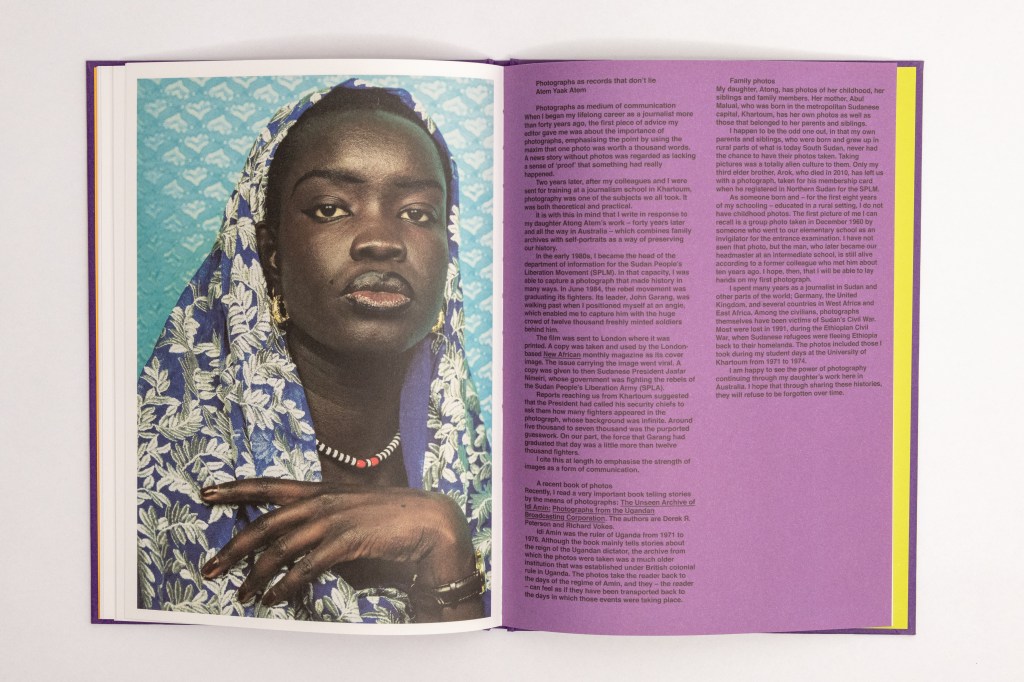
Her debut photobook, Surat, is a profound homage to the cultural significance of family photographs. Co-published by Photo Australia and Perimeter Editions as part of the PHOTO Editions series, Surat debuted during the PHOTO 2022 International Festival of Photography to critical acclaim. The title, Surat, meaning “snapshots” in Sudanese Arabic, aptly reflects its intimate exploration of familial and communal histories.
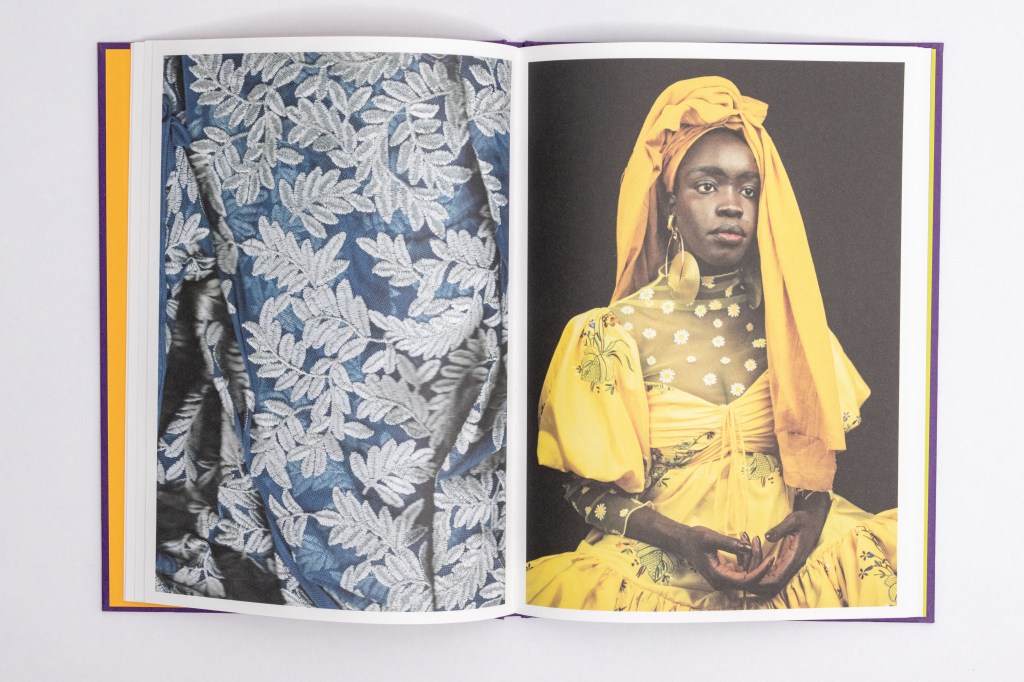
The photobook opens with a striking self-portrait of Atem, setting the tone for the vibrant and introspective images that follow. Combining archival family photographs with full-page spreads of Atem’s self-portraits and still-life compositions of textiles, Surat bridges generations. Atem’s portraits, often featuring her in elaborate costumes within studio or homestead settings, establish a commanding connection with the viewer through her direct gaze. This unflinching intensity underscores themes of presence, belonging, and the diasporic yearning for recognition.

The book’s exploration resonates deeply with diasporic communities, evoking shared experiences of preserving identity across continents. Atem raises poignant questions about how identity is “worn” through cultural expression, prompting readers to reflect on their own heritage. As a member of the diaspora, I find parallels in my own life—through wearing Kenyan attire, cooking traditional foods, listening to African music, and treasuring family albums. These small acts of preservation anchor me to my cultural roots, even in an ever-changing world.
Some works from Surat were exhibited at Tate Modern, London in 2023 as part of A World in Common: Contemporary African Photography. This exhibition celebrated African artists exploring how photography, film, and other media reinterpret Africa’s cultures and histories. Atem’s photographs, presented within this larger dialogue, magnified their vibrancy and impact, further underscoring their power to connect and reclaim cultural narratives.
Surat also includes an essay by Atem’s father, Atem Yaak Atem, a former journalist and South Sudanese Deputy Minister of Information. His reflections on the irreplaceable role of photographs as records of identity add a profound layer to the photobook’s narrative. He recounts his longing to recover a childhood photograph, highlighting how visual artefacts connect past and future.
Through her reimagining of family photo albums, Atem transforms photography into an extension of oral traditions. Her performative self-portraits embody characters and moments from her family’s past, elevating family photography into a medium of storytelling and cultural preservation. As Atem poignantly explains:
“We have few things that travel continents with us as familial practices. We have recipes and textiles, crocheted doilies and Majok beads, and we have photo albums. Some faces in our photographs are drawn over with a marker, some cut out entirely. Some photos are much, much older than me; others were printed from an iPhone. Photos are gestures, examples of culture in flux.”
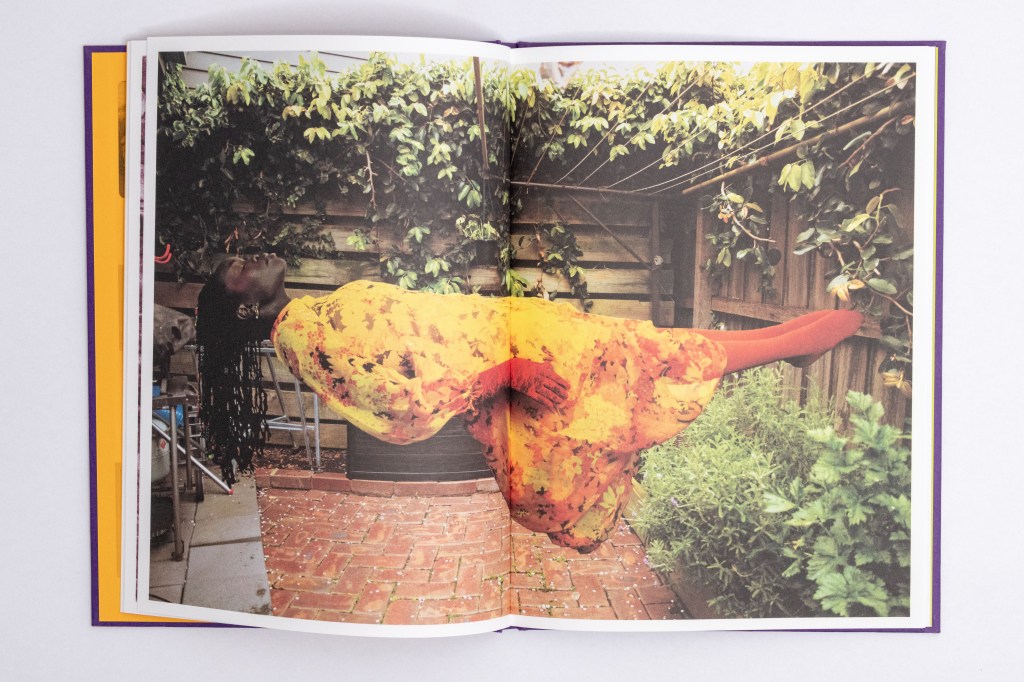
This approach situates family photographs as more than visual records—they become cultural artefacts, bridging the gaps between past, present, and future. Atem’s work celebrates the resilience of diasporic traditions, offering a nuanced view of how communities adapt and preserve their identities across generations.
Photography, as Atem’s work illustrates, is more than a medium of representation. It is a tool for resilience, reclamation, and storytelling, connecting generations and safeguarding histories that might otherwise fade. Through Surat, Atem invites us to reflect on the universal experience of family and the ways we document and share our stories. Her artistry not only celebrates the beauty of African and diasporic traditions but also challenges us to see photography as a vessel for memory, connection, and identity.
Family albums, in particular, are cultural, emotional, and historical treasures. They connect generations, preserve traditions, and affirm identity. Whether physical or digital, they are indispensable archives of human experience, anchoring us to our histories and guiding future generations.

Atong Atem’s Surat reminds us of the enduring power of photographs—not as static images but as dynamic artefacts of human life. Her work elevates the ordinary into the extraordinary, inspiring a deeper appreciation for the stories that shape our world.
NOTES
Perimeter Books, Atong Atem Surat. [online] Available at: https://www.perimeterbooks.com/products/pre-order-atong-atem-surat

 The African Photobook
Leave a comment